Louis XII, the "Father of the People"
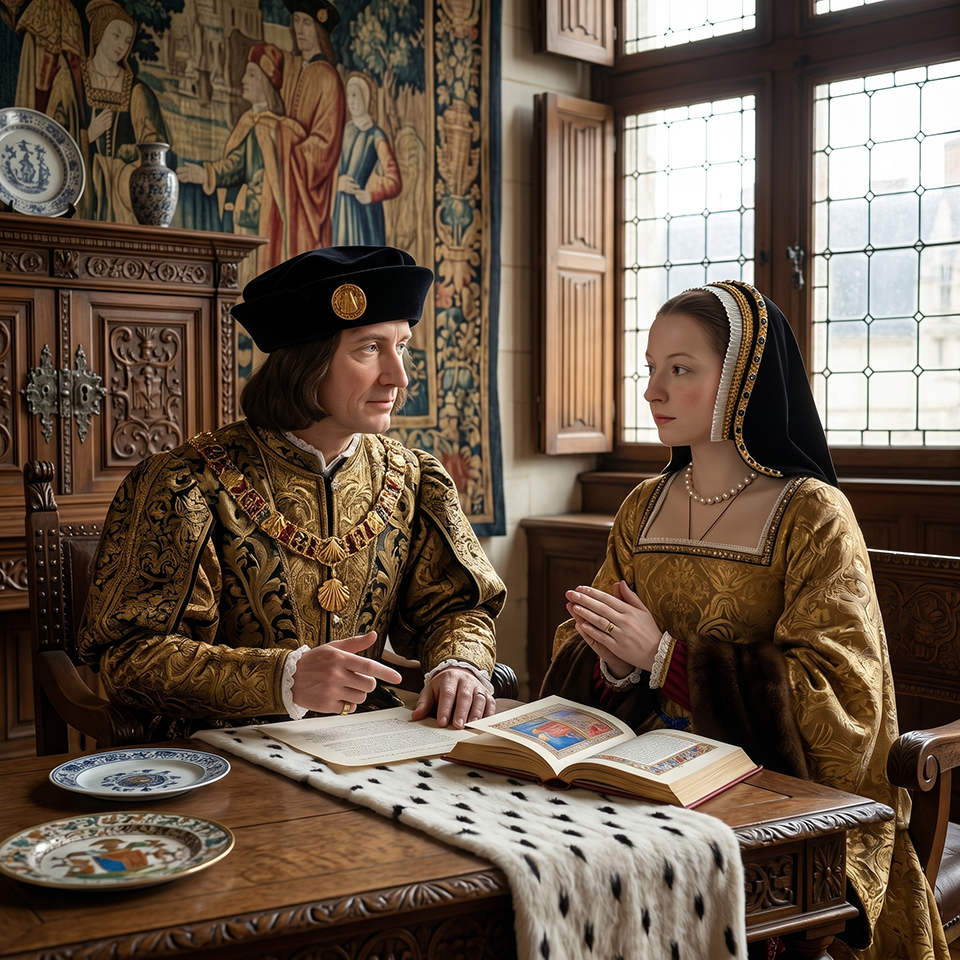
Immerse yourself in the fascinating twists and turns of French dynasties. From the Merovingians to the Bourbons, more than 1400 years of reigns have followed one another, forging the borders, institutions and culture of our country. But how do you navigate alliances, complex successions, betrayals and royal branches? It is precisely to meet this challenge that Dynastie has designed the complete genealogy of the Kings of France.
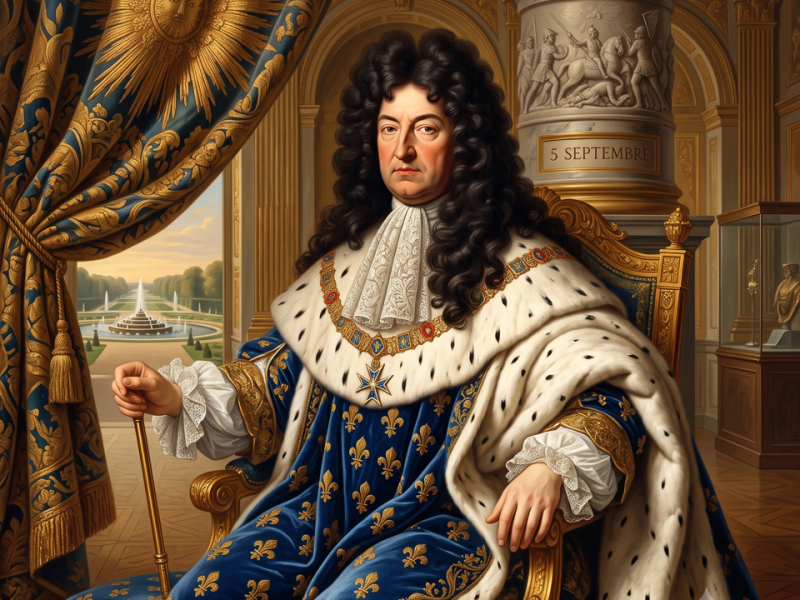
Born at the end of June 1462 at the Château de Blois, Louis XII, from the famous branch of the Valois-Orléans, is one of those essential sovereigns who deserve special attention. Nicknamed the Father of the People for his reign of rare clemency and modernity, he profoundly marked the end of the Middle Ages and the dawn of the Renaissance. In this in-depth article, we'll take an in-depth look at the life, major reforms, and alliances of this exceptional king, before guiding you step-by-step to find his unique trajectory on our genealogy poster.
1. The unexpected rise of a Valois-Orléans
Nothing initially predestined the young Louis d'Orléans to ascend the throne of the Lilies. Son of Charles of Orléans (the famous prince-poet captured at Agincourt) and Marie de Cleves, he belonged to a cadet branch of the House of Valois. During his youth, he suffered the iron fist of Louis XI, who forced him to marry his daughter Jeanne of France, an unhappy union without posterity. Later, he openly opposed the central royal power during the "Mad War" against the regent Anne de Beaujeu. Captured at the Battle of Saint-Aubin-du-Cormier, he spent nearly three years in captivity in harsh conditions.
However, dynastic fate changed on 7 April 1498. King Charles VIII died suddenly at the Château d'Amboise after hitting a door lintel, leaving no direct heir. Under Salic law, the crown goes to the closest cousin by male line: Louis of Orléans. At the age of 36, the former rebel was crowned in Reims under the name of Louis XII. This was the official advent of the Valois-Orléans branch at the top of the state.
2. A reforming Sovereign: Why the nickname "Father of the People"?
As soon as he acceded, Louis XII surprised his former detractors with a formula of great political nobility, which has remained engraved in the annals: "The King of France does not avenge the insults of the Duke of Orléans". Instead of starting purges, he pardons his former jailers and favors the unity of the kingdom.
His reign was characterized by extremely rigorous financial management, initiated under the influence of his main minister and friend, Cardinal Georges d'Amboise. Together, they managed to significantly reduce the taille (the main tax being the burden on the Third Estate) while reforming the administration of justice by the great ordinance of Blois in 1499. Louis XII ensured that procedures were faster, less corrupt and fairer for his subjects. In 1506, during the Estates General of Tours, the representatives of the three orders unanimously awarded him the title of Father of the People. The kingdom then experienced a period of lasting internal peace and remarkable economic prosperity.
3. Strategic Marriages: The Crucial Union with Anne of Brittany
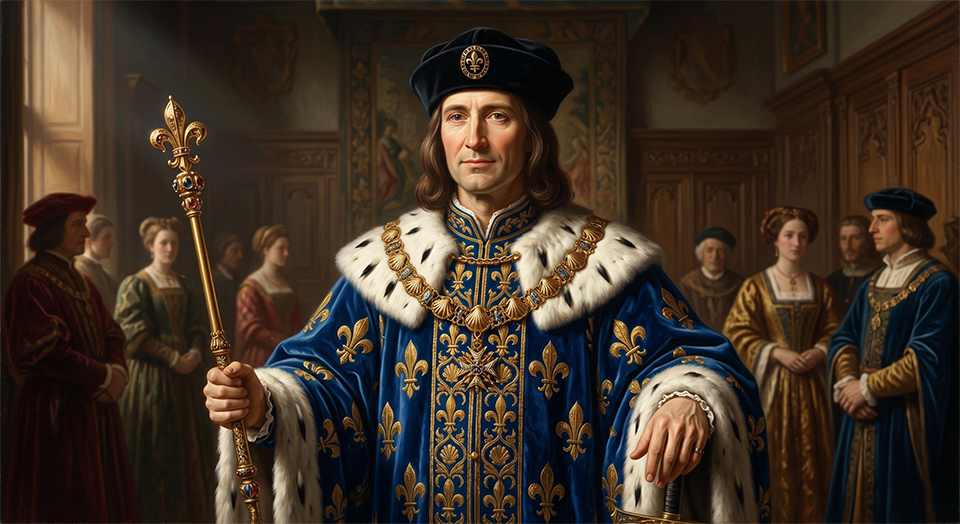
If Louis XII shone through his domestic policy, his foreign and matrimonial diplomacy was a model of high geopolitical strategy. To keep the rich and independent Duchy of Brittany definitively anchored to the royal domain, Louis XII had to apply a clause in his predecessor's marriage treaty: marry Charles VIII's widow, Queen Anne of Brittany.
The obstacle was considerable, because Louis XII was still married to Joan of France. After fierce negotiations and a complex ecclesiastical trial with Pope Alexander VI Borgia, the king obtained the annulment of his first union. In January 1499, he married Anne of Brittany in Nantes. This marriage was a masterstroke: it secured the western border of the kingdom and united the destinies of the two crowns. From this union was born Claude de France, the future wife of François I, thus acknowledging the smooth and legitimate passing of the baton to the next branch of the Valois-Angoulême.
4. How to read and understand the lineage of Louis XII on the Dynasty family tree
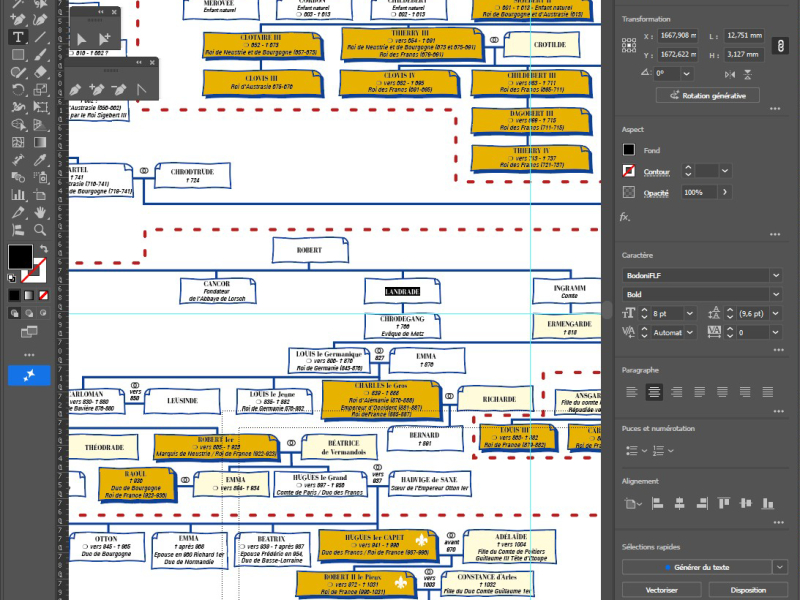
The history of Louis XII demonstrates the extent to which the French royal genealogy is a living network of alliances and transmissions. On our giant poster, available on https://www.roisdefrance.info/gb/module/dgtranslationall/urlstranslation, you can visually follow the ramifications of his reign:
-
Locate the House of Valois: Follow the main trunk of the direct Capetians to the branch of the Capetian House of Valois (initiated by Philip VI in 1328).
-
Follow the Valois-Orléans sub-branch: Step back into the reign of Charles V the Wise to observe the creation of the Duchy of Orleans given to his youngest son, Louis I of Orleans. Then follow the vertical line passing through Charles d'Orléans to the blossoming of Louis XII.
-
Analyze Major Alliances: Look at the horizontal lines connecting Louis XII to Anne of Brittany, then the descendants leading to Claude of France and his union with Francis I (branch of the Valois-Angoulême).
Our poster has been designed as an ultra-accurate historical navigation map. Certified by historians, it makes it possible at a glance to shed light on grey areas, to link key dates (such as his birth in June 1462) and to make the royal chronology clear for the whole family.

Share this content