Louis XIV and the Bourbons: Absolutism through Genealogy
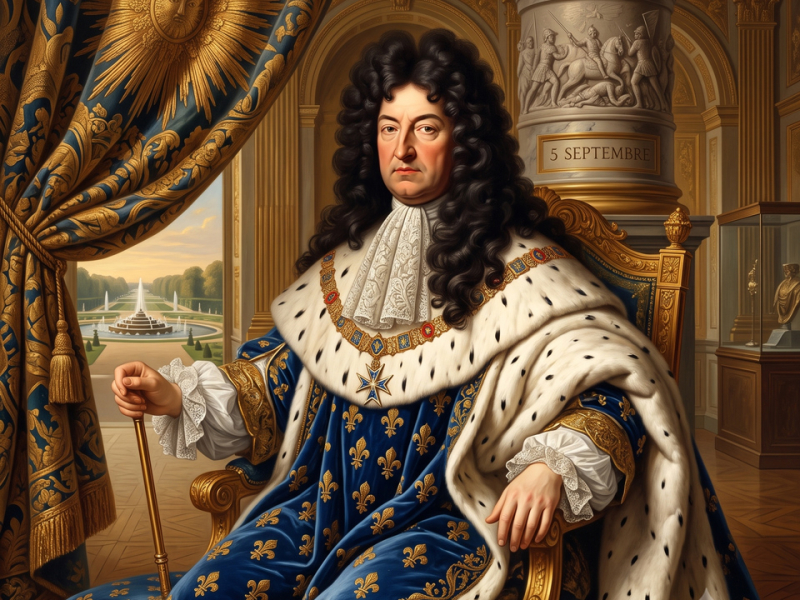
Understanding the history of France means above all diving into the fascinating meanders of its dynasties. From the Merovingians to the Bourbons, more than 1400 years of reigns have followed one another, forging the borders, the culture and the very identity of our country. But how do you find your way through the alliances, betrayals, wars of succession and the different royal branches? Today, September 5th, we celebrate the birth of a key figure who turned our legacy upside down: Louis XIV, the iconic Sun King.
The Birth of a "Dieudonné" and the Trial of the Fronde
Born on September 5, 1638, the birth of Louis XIV was a miracle. After more than twenty years of sterile marriage and desperate waiting for his parents, King Louis XIII and Queen Anne of Austria, this unexpected heir was immediately nicknamed "Louis-Dieudonné". Very early on, he carried the entire future of the Bourbon dynasty on his little shoulders.
Having become king at the age of 4 and a half on the death of his father, his childhood was marked by a period of great political instability: the Fronde. This complex revolt, led by parliamentarians and then by the high nobility, forced the royal family to flee Paris in the middle of the night. This traumatic episode forged in the young Louis an eternal distrust of the nobility, an aversion to the capital, and an unwavering desire to centralize power to guarantee the stability of the kingdom.
The Summit of European Absolutism
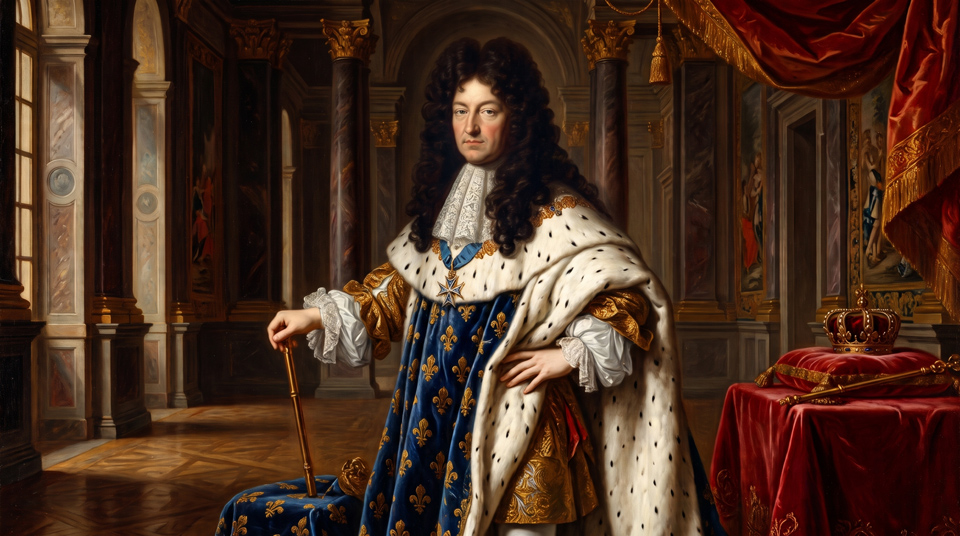
When his godfather and main minister, Cardinal Mazarin, died in 1661, a thunderclap resounded at court: at the age of 22, Louis XIV decided to govern alone, without a prime minister. This was the real beginning of the absolute monarchy of divine right.
His majestic reign brought his lineage to the summit of European absolutism. The king was God's lieutenant on earth, accountable only to himself. He surrounded himself with brilliant ministers from the bourgeoisie, such as Jean-Baptiste Colbert at the Ministry of Finance or the Marquis de Louvois at war, thus removing the great nobles from key positions in government. It was under his leadership that the French administration modernized and centralized in an unprecedented way.
The Splendour of Versailles: A Golden Prison
To establish his authority, the Sun King was not satisfied with laws; he used art and architecture. He transformed a modest paternal hunting lodge into an unequalled masterpiece: the Palace of Versailles.
The once rebellious nobility was now tamed, not by arms, but by etiquette. It was brought together under the watchful eye of the king, forced to spend fortunes on clothes and games to exist at court, thus losing all real political power. Versailles became the shining showcase of French power. The Bourbons were no longer just a royal branch; they dictated fashion, literature, art and diplomacy throughout Europe. It was the era of absolute patronage, radiating thanks to the genius of Molière, Jean-Baptiste Lully and André Le Nôtre.

The Twilight of a God and Dynastic Fragility
Despite this incomparable glory, the end of the reign was overshadowed by famines, ruinous wars (such as the War of the Spanish Succession) and above all, by terrible family tragedies.
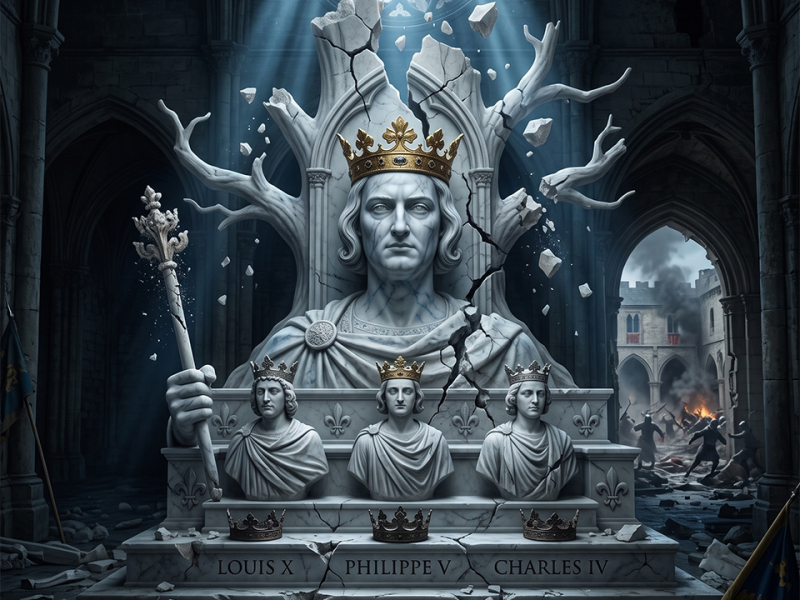
Genealogy can be cruel. Although he had many children, Louis XIV's direct line was decimated by illness (especially measles). In the space of a few years, he lost his son (the Grand Dauphin), his grandson (the Duke of Burgundy) and his eldest great-grandson. When he died on September 1, 1715, after a record reign of 72 years, it was his last great-grandson, a 5-year-old child in fragile health (the future Louis XV), who succeeded him.
How to read the Family Tree of the Kings of France?
It is to meet the challenge of dynastic complexity and visually illustrate these upheavals that DYNASTIE has designed the complete genealogy of the Kings of France. On our superb family tree, the reign of Louis XIV can be easily identified in the heart of the modern era.
To read this unique poster, certified by historians:
-
Follow the Central Line: Locate the main branches. From the direct Capetian dynasty to the Bourbons, observe the continuity of the famous "Capetian miracle".
-
Identify Ruptures: Changes in colors or strokes tell you when the crown is changing to a cousin branch (such as with the accession of Henry IV, the very first Bourbon king).
-
Observe the Descendants: On the tree, you will visually see the dramatic generational leap between Louis XIV and his successor Louis XV, perfectly illustrating the fragility of even the most powerful of bloodlines.
The History of France is a captivating novel. Display it in your home, decipher the evolution of royal power and never lose track of our majestic past.
Share this content